
Press Release
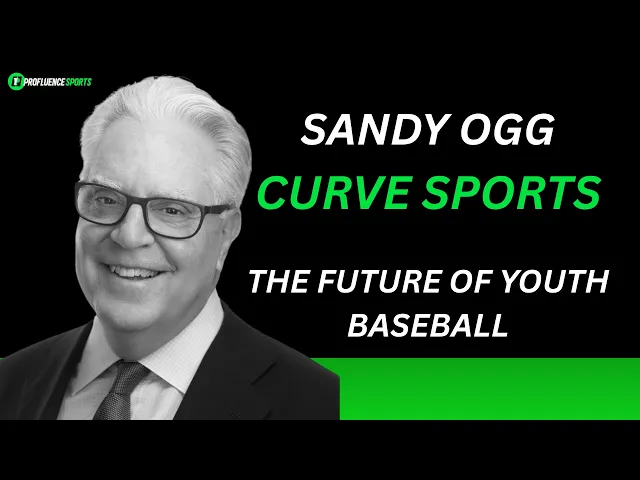
Sandy Ogg, Founder of Curve Sports - The Future of Youth Baseball

Sandy Ogg is the CEO of Curve Sports, a company partnering with elite youth baseball organizations to help them scale through capital, operational support, and shared best practices. Before launching Curve Sports, Sandy spent decades leading and advising some of the world's most influential organizations, serving as an Operating Partner at Blackstone, Chief Human Resources Officer at Unilever, and Chairman of Nord Anglia Education, one of the largest premium education groups globally. Rather than acquiring and rebranding youth sports organizations, Curve Sports partners with club owners, allowing them to retain their identity while gaining access to capital, operational expertise, and a nationwide network of elite operators. The company's long-term vision is to build a connected ecosystem of premier baseball organizations that creates better opportunities for athletes, families, and club leaders alike.
In this conversation, Sandy shares why youth sports represents one of the biggest untapped investment opportunities in sports, how Curve Sports is building a new model for consolidating travel baseball, why leadership matters more than financial engineering, and how the intersection of education, athletics, and long-term athlete development is shaping the future of youth sports.
Welcome back everyone to another episode of ProFluence Sports. Exciting one today, a lot of buzz always around youth sports, around consolidation, around roll-ups and M&A, and this one fits right in the center of it all. So from Curve Sports, we have Sandy.
So Sandy, appreciate you hopping on today. Excited for this conversation. Well, I so appreciate the invite and I'm excited to be with you today.
Appreciate it. Of course. And we like to start here.
You know, people will post your background. You've done a lot of cool things. We don't need to go into all the nitty gritty of that, but I spent a lot of your time.
We were talking about, you know, you were at Blackstone before and the beast that is, we ran an event with Blackstone a few weeks ago or I guess a few months ago now in New York City. And so it's cool to see them enter sports even. But, you know, you spent a lot of time across leadership and scaling large businesses.
Curious, like what made you jump into youth sports and ultimately be like, hey, I'm going to be the CEO of Curve Sports. Like what attracted you to the space, to the opportunity and what you guys are doing? Yeah, you know, it's a really, really good and important question. Funnily enough, it started for me because of my kids.
You know, my kids started to participate. We were just moving back. I had a role before in Europe.
We were just moving back to the States. My kids wanted to get into American sports from having been in Europe for a number of years. And baseball was high on the agenda.
And so we started playing baseball and we were living in the town of Rye, New York. I was working at Blackstone at the time. And, you know, if you know Rye, New York is sitting in the middle of Westchester County, it's a bunch of privileged people.
You know, I know a little bit too much about Rye. I've actually spent too much time there. So we, Westchester Soccer Club, the USL team, were owners in that.
So I know a little bit too much about Rye. But anyway, I know the ins and outs and I'd say that's a really good way to put it. But anyway, yeah, yeah.
I mean, nice people, but a lot of privilege. And so, you know, we came up through the Rye Little League and we had a local travel baseball team and it was made up of Rye kids. And we thought because, you know, the kids were good in Rye Little League, they were going to be really good in the broader travel ecosystem.
And then we met a little bit of reality. But the other thing that happened is one weekend, a bunch of our families were going off on holiday and we didn't have enough kids to play on the weekend tournament. And it was one of those tournaments that extended, started on like Thursday and went through to Tuesday.
So we had a bunch of games in a short period of time. Turns out our coach was a guy from the Bronx, ex-big league guy, great guy. So he goes, we were six kids short.
He goes and finds six kids, but they're from the Bronx and from Queens. And so he brings these six kids in. And I would say here's where underprivileged meets overprivileged.
And there are problems with both underprivileged kids and overprivileged kids. And for the weekend, we put these two together. And the first thing you could see is these six kids were different.
You know, they were a little bit more gritty. They were a little bit more hungry. And man, they could play.
But when you put them together, it was quite an interesting combination. And then the other kids came back and, you know, we were good. I mean, this combination was really good.
The other kids came back like, who are these dudes? And, you know, why are they playing in my position? Parents got upset of those kids. We got kicked off the rye fields. And so, you know, we decided to create our own team made up of this combination.
And we ran into a problem. My goodness. You know, like two of these kids lived with their family in a room in someone else's apartment.
So they couldn't afford travel, sports. Come on. You know, I mean, there was no way they could spend the money.
So my wife and I decided to, at that point, we started something called the New York Youth Baseball Foundation. And we just set it up so that we could help these kids. And so we did.
And one team became two, two became four, four became eight. And baseball became softball. And then I realized, you know, after doing this, that I could only go to my friends at Blackstone so often and say, give me my money so I can help these kids.
So we needed a business to do well in order to be able to do good. And you get a virtual circle going. And I start to then stumble into this youth sports ecosystem.
And I go, wow, this is really interesting. You know, 97% of the college roster spots are filled with kids who play travel sports. If you don't have money, you can't play travel sports.
You're shut out. And so, you know, the foundation is still an important part of what we're doing, underpinning Curve Sports, is if you're a kid and you're good enough and you're disciplined enough and so on, then, you know, we're going to provide resources. But we expect the family to pay something.
If you can afford a dollar, pay a dollar, pay something. Well, that led to, you know, we began to do some experimentation with something called the Diamond Allegiance. And we started doing curve testing.
And then we realized that the missing ingredient is capital. Missing ingredient was capital. You have these great clubs that are doing wonderful things with kids and so on and so forth.
But they just don't have the capital to be able to grow. And a lot of the capital was going to places like, hey, let's build big tournament machines and let's build software all over the place. By the way, that nobody can, that the clubs can't actually afford because the economics of the clubs are sort of upside down.
And, you know, and I had this parallel experience where I'm the chairman of a roll-up of prep schools called Nord Anglia Education, which is an EQT portfolio company. Okay, we started with four schools. Today, we have more than 90.
And this is a business, by the way, that just traded for $14.5 billion 20 years later. And when you look at the essence of a prep school, it's a teacher, it's a student, it's a parent. A youth sports club is a coach, a teacher, and a parent.
Oh, those are kind of similar. And here, the essence of youth sports is the club. It's the club because that's where the coaches are.
It's where the parents are. It's where the players are. And when those three things combine in unique ways, just like in a prep school, magic happens.
Great outcomes occur and the whole thing. So I started to say, wait a second. I'm sitting as the chairman of the board of Nord Anglia and I'm watching this amazing roll-up of prep schools.
And I said, gee, we should be doing the same thing. So I went to Drew Weatherford and I said, hey, Drew, what we're missing here is capital. Why don't we partner together? We started Curve Sports and Drew's famous for saying, hey, let's go buy some baseball clubs.
And we're not actually buying them. What we're doing is partnering with them. So we meet a, you know, there are, we did our work, 2,600 sort of so-called elite travel baseball clubs in the country.
And of that pool of 2,600, I think with a hundred and actually if you get the right 25, you're off to the races. So we started in November and we started not buying but partnering with. So if somebody wants to sell their club, they're looking for a buyout.
They're looking for a payday. That's not us. We're looking for someone who wants a ticket to the big game.
And the big game is like the game at Nord Anglia where we invest in their business. We like to invest to get to a control position of their business so we can consolidate the earnings. And then we want them to roll in with us for the ticket to the dance.
And then we begin down the road of we're now partners. You become an employee, you become our partner. And so we're partnering.
And the thing I look for first is the quality of the leader. I'm hunting for, I'm trying to build a major league roster, 25 to 30 of the best club owners from a leadership point of view in the country. And we got three so far.
We've got another three that we're very close to finalizing. We've got another five that we're well down the road. And as a result of the first three and some of the word getting around, we have like an avalanche of inbound interest.
And our biggest problem is can we work through them fast enough to meet the demand of the situation? And I just couldn't be more excited about it because to me, it goes right back to if we can make a difference in young people's lives. And I'll tell you a short story. I'm sitting at my house right here.
I'm sitting right now in Bedford, New York. I'd split my time between Bedford and Tampa. Love Tampa, by the way.
Not in the summer though, right? Yeah. Yeah, today it's only 80 here. It's a little bit warmer than that in Tampa.
But I'm sitting right here and someone knocks on the door from that original team that we started in Rye, New York. From that original team with those other six kids that were coming from the inner city of New York. We had nine Division I baseball players, nine from one team.
One of those kids who was not Division I, he was Division III. He knocks on my door and he has now gone to college. He has graduated from college and he knocks on my door and he's standing there with his jersey on.
And I wanna say he played at SUNY Cobbleskill. But by the way, he was the first person in the history of his family to ever go to college. He graduated and he got a job working in finance.
And he just stands there and he goes like this, I did it. But without you, I would have never made it. And I said, well, I thought that I was doing something good for other people.
And I realized at that moment, this was actually very important to me, that it's meaningful. This is really meaningful stuff that we're working on. And you ask why youth sports? I'm just absolutely hooked on it.
And I'm not hooked on it just on a, I'm doing a good thing. I'm hooked on it from the point of view that it is an amazing, amazing business opportunity. Because we took Nord Anglia, which most prep schools, anybody who sends their kids to prep school, they get tired of being asked for donations to keep the prep school alive.
We run really, really good prep schools. And it is a big, important business. We just traded it for 14 and a half billion.
So there's, this is a real business, but it also can make a difference in people's lives and make a difference in the world. Yep, yep. And I got a lot of different calls on that, but I always appreciate it, Sandy, when the podcast guest goes through half of the things that I'm thinking of during it.
I'm like, all right, I was gonna go on there. You went to that about youth sports. You went to youth baseball and how many clubs are there and what are their percentages.
And then there's questions of like, you tell the story really well, right? Which is a key component for I think anyone in business. So that's interesting. I think that's something we might come back to here in a bit, but something I wanna go first, right? We're seeing a lot of consolidation across sports as a whole, right? And we've seen some of the club and youth sports stuff before, but not really so much in baseball.
We've seen it in basketball and lacrosse and some of these other ones. But when you come into an org and you talked a little bit about your structure, so we don't have to go over that again. Like you guys partner up, you know, day one, like what's the rollout? Like what's your plan? How do you go into these? How do you approach them? How do you clean them up? How do you set the vision? How do you tell the story? I'm curious, you've done a lot of this for a large part of your career.
And I think this is where a lot of where sports is going. And so in general, I'm just curious, what's your rollout plan once you're in and how do you integrate and take these things forward? Yeah, it's such a good and important question. I think the first where it all starts is in the conversation in the beginning, where, first of all, I'm looking, as I said before, for that leader.
And I'm looking for somebody who wants to make a difference. And then we ask them early on, are you looking to sell out? Or are you looking to kind of earn in, have a real ticket to what the future can be? And we've lived it and we've seen it. And so we know what it can be.
If you're up for that, let's go. Because the process of selling, some of these businesses are pretty substantial. The process of selling a business is not easy.
And so the first part is, am I ready for the whole process that I'm gonna go through here of, in the first instance, working your way up to getting an offer. And then once there's an offer, then all of the quality of earnings investigation needs to happen. And then the preparation of the documents.
And I feel like, am I really trusted in this? And then we consummate a deal and that goes over several months. It feels like, geez, this is complicated. And so on.
But then we're explaining, if we actually wanna build something of scale, it needs to be built on a rock solid foundation. If you want serious investors to come into it, then we're gonna have to do this work together. And if we learn about being partners by doing the work together.
So it all starts before it starts. Now we're on day one. And I think that we see the value creation approach for this is gonna evolve over three or four steps.
The first step is just partnering with the right clubs, the right leaders, the right markets. And we look for three things in a market. Number one is a certain level of affluence.
Then we look for baseball obsession. Is there a lot of baseball in that market? And then we look for college jersey density because a great outcome from these clubs is not winning tournaments. It's a college jersey.
Someone who has the opportunity to, because we believe that the scholar athlete is a national treasure. This is where the leaders come from. We're building leaders for our country, building leaders for the world.
And so we're looking for that college destination. And so we expect people to look after their grades and so on so they can earn a college roster spot. And so then once we say, okay, we're gonna make an investment in this club, then what we wanna do is we wanna buy the right, invest in the right clubs and in the right people.
And then we start down the path of value creation, which is the first thing is, can we assemble around that club more roster spots? And meaning there may be, let's say we invest in a club that has a thousand families in it now. There are many small teams, collections of teams. Maybe there's 10 teams over here.
There's 10 teams over there. Can we attract them to what we're doing? So more roster spots. And the second thing is more revenue per roster spot while reducing the overall investment by the parents potentially, because the parents are spending a lot.
They're spending on all kinds of things for their young athlete. And so by adding more services to what we can provide from the club, we have a performance flywheel, test, train, compete, recruit. Test, train, compete, recruit.
So we have a testing service. We have a training. We have competition.
So going to tournaments or what have you, and then recruiting, the actual process of getting people recruited. Some of the clubs have, are really good and major in training. Some of the clubs are really good and major in competition, going to tournaments and things like that.
Most of them are pretty good at recruiting because it's important to the parents and not so good at testing. And so we kind of help them to add what they don't have and find ways to take their, and here's the important part. They run their business.
We don't change their brand. They keep their brand because that brand is known in the market. So we want that operator to be our partner and continue running it, but now let's run it.
And then we have a sort of round table and every club that joins, they get a seat at the round table and we share ideas and best practices every Monday. Boom, boom, boom, boom, boom. Hey, I see that you're not doing training, but hey, look this person over here, they're really good at training.
Maybe you could get some ideas. Hey, these guys have a uniform deal that's out of this world. They're generating this kind of money.
These people are occupying really young athletes really well. Maybe you're not so much. And so we do a lot of that sharing back and forth, club owner to club owner, sharing ideas of how we can run these businesses better.
We don't tend to go after simple back office, cost reduction, fire your people. You can do it. We don't do any of that in the beginning.
If they discover by looking at the way, hey, look, this published a league table of who's got the best margins. Yours are kind of at the bottom. Look, this person's at the top.
Maybe you should go talk to them about how to improve the margins. So we go from that, let's get ourselves integrated and started. And then we, so more roster spots, more revenue per roster spot.
And organically now the clubs are getting bigger. Then we look for people they could partner with in a particular market, where if we can have three substantial clubs in a market, then we can create a super club. And why would you want to have a super club? Well, you may have three clubs that are in a particular market that have been competing with each other like crazy.
We want them to continue to do that. But what could we, what are the few things we could work together on? Like, could we run our own tournaments in the market and not have to travel away to all these different things? But we go off to a few special ones. And now it's more local.
The parents can be more involved. They don't have to travel as much. So if we can reduce the travel, because that's an expense that does not make a better baseball player.
Some travel is fun, but that does not necessarily make you a better baseball player. So that's kind of the second step there. Then we look for a facilities moat.
And can we, because you don't need to own the facility, but you need to control it. And then finally, we want to be able to put an academy, a True Cut Scholar Athlete Academy. And that's where our emerging partnership with IMG and the build out of IMG Local becomes really important.
It makes sense. And it's fascinating. I've had some experience in this space over the last couple of years on the sports side and not in sports as well, just as medical things get rolled up.
And you talked about how this looks. And I'm curious, and you can go into as much detail or as little detail as you want, but you get North Anglica to 70 prep schools, right? You're at three. We'll call it, hey, hopefully by end of next year, you'll be at like 10 or whatever.
What is the path to look like to get this to there? Do you see it as a bigger opportunity? Do you see it as sort of equal? Do you see it as like, hey, this will eventually become part of that because education's changing in the US. And so the model's changing a little bit as well. There's a lot of other macro factors going on just with AI and how education's shifting.
That's piece one. And then number two, like for the early believers, like do you do this on like recaps? And so people like, as you said, you're earning in. And so now you're better to be the fifth club in than the 50th club in.
Like I'm curious a little bit on some of that stuff. Yeah, yeah. You know, when we first started, we thought that, you know, we would, you know, we had a kind of a slogan, which was 30 clubs in 30 months.
And let's say that they have half a million of EBITDA at the start. And if we can grow them from half a million to a million, 30 clubs at a million of EBITDA each, you've got a 30 million EBITDA business. And, you know, by instead of having one club, which may trade at four or five times EBITDA, you've now got 30 that'll trade at 12, 12 to even 15 times EBITDA and by working together.
So now, you know, you've created a pretty significant amount of, because if you've got 30 million of EBITDA and you sell it, make the math simple, you sell it at 10 times or you sell it at 15 times, you've created some real value there. And so what we're seeing now though, is that when we've got so much inbound interest, what if we had 30 super clubs that we began to get them to work together in a particular market. So instead of 30, you're probably talking more like a hundred clubs, but built around 30 hub like locations.
And that a club, instead of being a hundred, a million of EBITDA, what if it was two or three or four? So now you're starting to talk about a business that is very substantial. And we don't know yet. One thing we're pretty sure of is, it's gonna be more than 30 and it's gonna be more than a million per.
So it's more than 30 and it's more than a million. And so this can be, and if you have 2,600 clubs in the country, and if you go softball, baseball, and then softball, we just focus, which is our focus on diamond sports. Now you can have a business that is very, very substantial.
And if you say, well, what we, cause I believe people always overestimate what you can do in one year. But they underestimate what you can do in three. And so I think by year three, by the end of year one, we'll be running up to something close, I think to, cause we're picking up the speed of our M&A activity because of all the demand.
By the end of the first year, we will be probably in the neighborhood of a run rate of 10 clubs. And so, and we will move faster from there. And I don't know where we'll be in the first five years, but I know we'll be further than we thought we would.
Yeah, yeah, no, that's helpful. And I think it's a good call out. I mean, just even on the Pro Fluence side, we're two and a half years in, and the first year, like you said, I think it's just a compounding value.
Like that just starts to accrue across everything and you can get the speed going a little bit faster. Now I wanna go here, just, we've covered a lot of topics. We try to keep these around 30 minutes.
We're edging up on that. We can go a little over, that's fine. But you've sat, this is just, this is part sports, part macro.
You sat on the education side, right? And you've seen what's happening there. Now you're sitting deeper in the sports side and what's happening there. I'm curious, like where you think this is gonna play out? Because I think it's even, I graduated high school over 10 years ago now.
And I played, I went through the travel to get the scholarship in college. Again, my parents spent a good bit of money, but it was a good ROI in terms of how it all worked out. But even the value of a college education seems to be changing.
And prep schools can be super valuable, like an IMG Academy. Again, I don't have a per se, like direct question on this. I'm just curious, like what you see is happening in education and sports and where you see mixed.
What do you think like is gonna change? College is changing a lot too with NIL. And I'm just curious any macro thoughts sort of around how does both spaces transform education and sports? Like it's, there's gonna be some interesting things that happen. Yeah, it's such a good question.
And one of the things we're emphasizing now at Nord Anglia in our prep schools is that we teach the skills that AI can't replace. So school is gonna be important. Sports is even more important because when you think about the skills, think about yourself.
I mean, the things that you have learned and the things you're doing now, I find that the scholar athlete is, they're just different. And you know it when you meet them. They're just different because there are a set of skills you can get by being a great student and engaging in the education process and so on and so forth.
There's a set of skills that those coaches, you know, and teachers and coaches, wow, and the skills that those coaches, you know, you think about, hey, I've got a teammate that's struggling there. I've learned how to, you know, go pick them up a little bit. What about that? And think about the number of decisions a shortstop has to make when the ball is hit to her or to him.
Think how many decisions they have to make in a split second about where am I gonna throw the ball? What's the situation? That, that, that, that. And thinking in real time and, you know, being, and they know what performance is and they know what winning is and losing and so on. You start to put this stuff together and that's why I think the scholar athlete and there will be, and of course we're already seeing it.
I mean, IMG is a special place. The kids that come out of there, you know, they, you know, and it's no longer they're building Maria Sharapova and Andre Agassi. You know, they are sending kids to the best schools in the country and in the world.
And then those kids are going and making a difference in the world. So I think this building of this cadre of scholar, and it's something, the scholar athlete is something that is in many ways unique to our country because we blend the two. And I think when you can create the right blend of sports and education, or in some cases it might be, I learned the arts and education, but let's just stick with sports and education.
I think these kinds of academies are gonna add more value. And I'm not one of these people who believes that AI is gonna take everybody's jobs. I think AI is gonna make everybody's jobs cooler, better, more fun, and so on.
But there are skills that AI can't replace. And that's what's happening. That's, and youth sports is gonna grow and it's gonna grow even faster because of the need.
All parents are worried. You know, kids are spending too much time sitting, looking at screens and stuff like that and not learning how to interact with other people and how to engage. And, you know, if you're on a team, you're engaging, you know, and AI can't hit the ball for you and it can't run to first base and it can't help the shortstop to decide because, you know, the AI isn't in their ear.
It's saying, hey, the ball's coming. You gotta figure out how to do that. And just think of yourself, you know, you're here, you're running this podcast and all the skills and things that you've learned about how to engage, how to design something like this, how to know that it should be 30 minutes and it should not be longer and, you know, all that.
I wonder where that came from. You know, where did you learn and the initiative to be able to do it and the confidence to know, hey, I could do this. You can really get me excited talking about this point here.
Yeah, it's a fascinating topic. And yeah, I just, I get enthralled into all of it of the future and where things can go and history and it all is just interesting to me. I just like to learn.
And so it's a cool perspective. It's gonna be more. There's gonna be more of these, you will see more of these academies emerge.
They will be more local in nature. And, you know, and they, in some cases, they'll be more specialized. In some cases, they'll be more integrated.
But there's definitely gonna be more of this. There already are baseball specific academies. Many of them are not quite good enough on the education side, but it's gonna, they're gonna get better.
That's gonna happen. I do. And so I think, you know, the future is actually quite exciting.
And I know myself every day, I'm in it with all of the different and interesting things that I've been privileged enough to work on. This youth sports venture is the most exciting thing I've ever worked on. Yeah, that's cool to hear.
I have one more. I would cut it off now, but I have one more question. I just want your perspective on it.
Sort of came top of mind as you were talking about that. So we talk about schools and academies and how this is gonna change and the specialization. I'm curious, you've sat on private equity for a large part of your life and rolling things up.
And, you know, sports traditionally has been very mom and pop ownership across, you know, whether it's professional teams, whether it's youth clubs. And now it's starting to get, you know, merged together through private equity as more groups, right? And, you know, the long tail of it is eventually there probably won't be as many single owners. There'll be just a lot of groups that own these things.
I'm curious how you think about that. Good, bad, you know, just because even five, six years ago, a lot of the professional teams didn't. They were owned by, you know, families that owned them for 40 years.
And now you're getting the Blackstones owning pieces of them. And now you're getting to youth sports and, you know, like what you guys are doing and the other, like, how do you see all that playing out as, you know, you call it sort of the professionalization of sports and the ownership from, you know, asset managers that weren't typically interested are now starting to, you know, jump on the industry. Yeah, I think, you know, it goes back to when you look at a, you know, and I've worked on roll-ups of dentists, veterinarians, HVAC companies, prep schools, quarries.
I've worked on a bunch of roll-ups in the time that I've been working in and around. And the one thing I, if I look, if I take education as an example, many of the prep schools are barely hanging on because they need capital. And you can only go to the parents so often and ask them to donate in order to prop up and build capital projects.
And these schools are amazing. What the teachers do, the quality of the teachers and all that stuff, but they're starved for capital. And then you have people that, and private capital is a really good thing.
And when you can bring capital into a situation that is going to improve the experience for, it's going to improve the experience for the teacher. It's going to improve the experience for the student. It's going to improve the experience.
When these experiences get better. and capital helps that to happen. And so I think the capital is necessary.
I don't think, it isn't private equity that is the problem. And private equity is improving a lot of things. And so I'm really bullish on the positive impact that this capital can have.
And if you are one of those club owners who is actually working with that player, with that parent and with that coach in order to make something happen, you're really wanting, and you can't do as good a job as you might do because your facilities aren't quite up to scratch. And you don't quite have enough to, and the way the parent has to interact with the thing, well, I don't really have the capital to be able to do that. When that capital becomes available, now we can improve the experience for the parent, improve the experience and the outcomes for the player.
You need capital to do that. And does the capital need returns? Of course it does. And so we have to run these as good businesses.
But I see the, I'll tell you, this professionalization is better for the system. And I've watched it. I've seen it.
And it's not this ugly sucking the life out of, you know, that people want to blow it all up into something terrible. It's just not. Yeah.
And I appreciate that perspective. That's why I ask, and I'm a family member, part of a roll-up in the medical space, sort of similar to the dentist one. And, you know, I'd say that the experience has been positive from the standpoint of, you know, the family members spent 30 years building the business, took all the risk and then had a nice, you know, partial liquidity.
They still, again, similar to your structure, like they have more to like work towards and get the rest of, but also right away, day one, they came in and all the people working for the business got higher salaries. Right. And they didn't cut anyone out and, you know, they can share services.
So they're getting discounts on what they would normally pay for anesthesia is cheaper. Right. So anyway, I appreciate you.
You see a lot of negative in the news around it. And so I'm never tied to one side, right? I always try to stay in the middle and form an own judgment. And so anyway, it's a, it's a really good perspective.
And so thanks for sharing that. But yeah, overall, Sandy, this has been amazing. Incredible conversation.
One of the more enjoyable ones for me. I think these things are fascinating and they're very multi, you know, instead of a singular, when we have podcast guests, nothing against them, they're still interesting. But when they're building just a singular betting product versus something like this, these ones obviously are a little more interesting to me.
So thanks for coming on. And where can people learn more about Curve and what you guys are doing and check out some of the cool stuff you got going? Yeah. Well, I want to thank you for having me be a part of this.
I think that you're doing a better job with your podcast than I'm doing with mine. And I learned some things from you today. So I really appreciate, I appreciate that and appreciate being a part of it.
And, you know, Curve Sports, you know, you can follow us on, you know, we're on all of the major social platforms. And, you know, we just announced club number three. We're very excited about that.
And you'll see the velocity of our announcements will happen faster because we're picking up steam. And of course, we have websites and all of that. So I hope that if someone has an interest in youth sports, I hope they find this useful.

